
What's going on
Losing 50 to 100 hairs a day is normal. Each hair grows for years, rests for about three months, then falls. A shock pushes far more hairs than usual into the resting phase at once. Three months later they all fall together. By then the trigger is often over, which is why it seems to come from nowhere.
Common triggers
- a high fever or a bad infection, including flu and Covid
- an operation or a general anaesthetic
- childbirth (see hair loss after pregnancy)
- crash dieting or fast weight loss, including on weight-loss injections
- starting or stopping some medicines, including the pill
- low iron or a thyroid problem
- a bereavement or other severe stress
How it differs from pattern hair loss
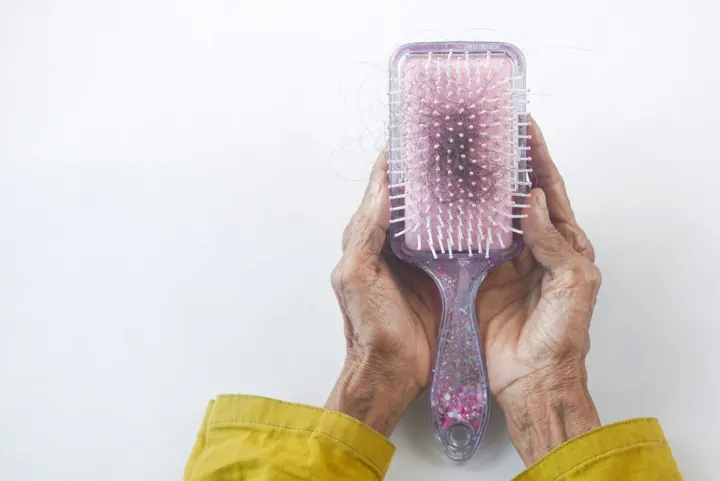
Shedding is sudden and comes from all over the head. You notice hair in the shower, on the pillow and in the brush. The scalp looks normal and there are no bald patches. Pattern hair loss is slow and follows a shape. Sometimes shedding uncovers pattern loss that was already there.
What recovery looks like
- Weeks 1 to 8 of shedding: the worst of it. Counting hairs makes it feel worse; photos are kinder.
- Month 3 to 4: the daily fall eases.
- Month 4 to 6: short new hairs appear at the hairline and parting.
- Month 6 to 12: thickness comes back as those hairs grow.
If shedding keeps coming and going for more than six months, doctors call it chronic telogen effluvium. It is most often seen in women in their thirties to fifties, it doesn't lead to baldness, and it is a reason for a GP visit and blood tests.
What to do
Mostly, wait. Eat well, be gentle with your hair, and take photos monthly so you can see it recover. See your GP if it goes on beyond six months, if you feel unwell, or if you see patches or a sore scalp. A blood test for iron and thyroid is worth having.
You don't need a clinic course for telogen effluvium. Be wary of anyone selling one.
Questions people ask
How long does telogen effluvium last?
Shedding usually eases within three to six months. Thickness takes longer to return, because hair grows about a centimetre a month.
Will I go bald?
No. Telogen effluvium thins hair but doesn't cause baldness.
Can weight-loss injections cause it?
Fast weight loss by any method can trigger shedding. It usually settles once your weight steadies. Talk to your prescriber if it worries you.
Should I use minoxidil for telogen effluvium?
It isn't needed for shedding that will recover by itself. Ask your GP if it has gone on for more than six months.